アンドリュー・クランストン -Birds, beasts, and flowers のご案内
この秋、両足院ではスコットランドのグラスゴーを拠点にするアーティスト、アンドリュー・クランストン によるアジア初となる展覧会を開催いたします。本展はクランストンの所属ギャラリーである、エディンバ ラのIngleby(イングルビー)とロンドンのModern Art(モダン・アート)によって企画されました。今回 クランストンが展示するのは、Birds, beasts and flowers(鳥、獣、花)と題された一連の絵画作品で、この タイトルは1923年に初版が刊行されたD・H・ロレンスの詩集に由来します。クランストンは19歳の時、夜 間の英語クラスでこの詩集に出逢いました。「彼の詩は感情のあり方や思考の多様性を開放し、また客観と 主観を自由に行き来する方法を示してくれました。特に私が惹かれたのはその観察的な姿勢です。目に映る もの、心に思い浮かぶことを記録しながら、あちらこちらへ思考を巡らせていく。それは推敲されていない ようで、詩的な装飾もなく、ふぞろいで、堂々巡りをしながら、同じことを繰り返すこともあります」と説 明します。
ロレンスの詩はそれぞれが独立した作品でありながら、全体を通して読むことで自然界に存在する他者性に ついての哲学的な思索へと導きます。クランストンの絵画もこの詩に共通する要素があり、一点一点は独立 していながらにして緩やかなつながりを持ち、それぞれの物語が交錯し、溶け合うことでひとつの大きな物 語を紡ぎ出しているかのようです。今回展示される作品は650年以上にわたる両足院の⻑い歴史や神秘的な 趣をたたえる建築空間と呼応しながら、部屋ごとに異なるスケールを探求するサイトスペシフィックな試み として構成されます。儀式や坐禅が行われる「方丈」、かつて僧侶たちの書斎として使われ、庭園の池や小 径を望む「大書院」、そして庭園の向こう側に佇むふたつの小さな茶室「臨池亭」と「水月亭」。それぞれ の空間の特徴を活かしたインスタレーションが展開されます。
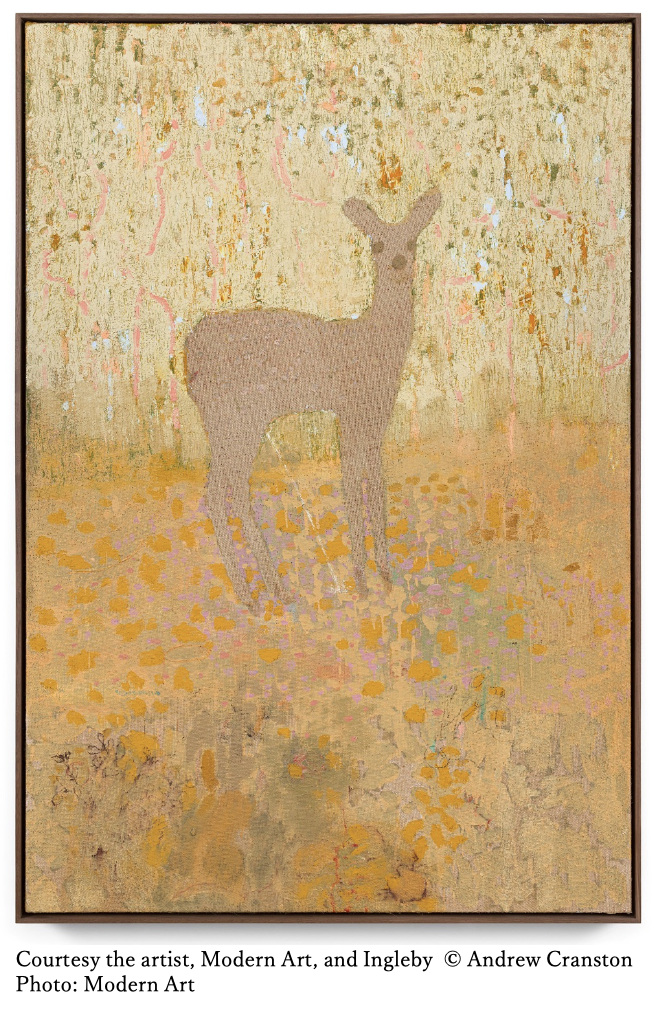
クランストンの絵画は彼自身の個人的な経験に深く根ざしています。ふと目にした光景、その瞬間に感じた
こと、記憶に残る出来事などが絵画として描かれる過程で取捨選択され、脚色され、ときには完全に消し去
られていきます。ある作品に登場したモチーフが別の作品にも登場することがあり、見る者にどこか親しみ
やすさをもたらします。それは単純な描写というよりは、描かれた対象についての感覚そのものが鑑賞者に
共有されているかのような印象を生み出しますが、その親しみやすさには常にどこか不可思議なものが潜ん
でおり、見慣れたものが思いがけない角度から捉え直されています。美術評論家のベン・ルークはクランス
トンの絵画作品について「美術史や映画、詩、テレビシリーズに由来するイメージやアイデアは作品制作の
主題として、あるいはタイトルにさりげなく引用されることもあります。そのため、彼の創作活動は時間や
歴史と深く結びついています。それは過去の出来事や経験を想起させながら現在における解釈をさせ、作品
に用いられる素材や制作手法そのものにも表れています」と解説します。秋も深まる季節、さまざまな文化
的背景が両足院の禅の環境にて豊かに響き合う展覧会、ぜひご高覧いただけましたら幸いです。


Birds, beasts, and flowers
⚫ 一般会期
会期:2026年11月6日〜11月22日 会期中無休
時間:13:00 - 17:00 (最終入場 16:30) 会場:両足院
京都府京都市東山区大和大路通四条下る4丁目小松町591
特別拝観料 : \1,000, 高校生以下\500(現金のみ) 団体\900(20名以上)


This autumn, Ryosokuin Temple will host the first exhibition in Asia by Glasgow-based Scottish artist Andrew Cranston. The exhibition has been organized by Cranston’s galleries, Ingleby in Edinburgh and Modern Art in London.
Cranston will present a series of paintings entitled Birds, Beasts and Flowers, a title drawn from D. H. Lawrence’s poetry collection, first published in 1923. Cranston encountered the book in an evening English class when he was nineteen.
“His poems opened up different ways of feeling and thinking, and showed me how to move freely between the objective and the subjective,” Cranston explains. “I was particularly drawn to his powers of observation: he records what he sees and what comes to mind, allowing his thoughts to wander here and there. The poems can seem unpolished and free of poetic ornament—uneven and circuitous, sometimes repeating the same thing.”
Although each of Lawrence’s poems stands independently, read together they lead us toward a philosophical contemplation of otherness in the natural world. Cranston’s paintings share this quality. Each work is autonomous, yet loosely connected to the others; their individual narratives intersect and dissolve into one another, as though weaving a single, larger story.
The works in this exhibition will enter into dialogue with Ryosokuin’s architecture—an atmosphere steeped in mystery and more than 650 years of history. Conceived as a site-specific installation, the exhibition explores a different sense of scale in each room: the Hōjō, where ceremonies and Zen meditation are held; the Daishoin, once used as a study by the temple’s monks and overlooking the garden pond and pathways; and the two small teahouses, Rinchitei and Suigetsutei, situated beyond the garden. Each installation responds to and draws upon the distinctive character of its setting.


Cranston’s paintings are deeply rooted in his personal experiences. Fleeting scenes, feelings experienced in the moment, and memorable events are selected, embellished, and sometimes erased entirely as they are transformed into paintings. Motifs appearing in one work may reappear in another, creating a sense of familiarity for the viewer.
Rather than simply depicting their subjects, the paintings seem to share with the viewer the very sensations those subjects evoke. Yet something mysterious always lurks beneath this familiarity, as recognizable things are reconsidered from unexpected perspectives.
Art critic Ben Luke writes of Cranston’s paintings: “Images and ideas drawn from art history, cinema, poetry, and television series may serve as subjects for his works or appear as subtle references in their titles. His practice is therefore deeply connected to time and history. It evokes past events and experiences while inviting us to interpret them in the present—a quality also reflected in the materials and techniques he employs.”
As autumn deepens, we hope you will join us for this exhibition, in which diverse cultural traditions resonate richly within the Zen setting of Ryosokuin Temple.
Birds, Beasts and Flowers
Public Exhibition
Dates: November 6–22, 2026
Open daily throughout the exhibition period
Hours: 1:00–5:00 p.m.
Last admission at 4:30 p.m.
Venue: Ryosokuin Temple
591 Komatsu-cho, Yamato-oji-dori Shijo-sagaru, 4-chome, Higashiyama-ku, Kyoto
Special admission:
Adults: ¥1,000
High-school students and younger: ¥500
Groups of 20 or more: ¥900 per person
Cash only